
von
Lavender calms. Clove numbs. Peppermint invigorates. Frankincense grounds.
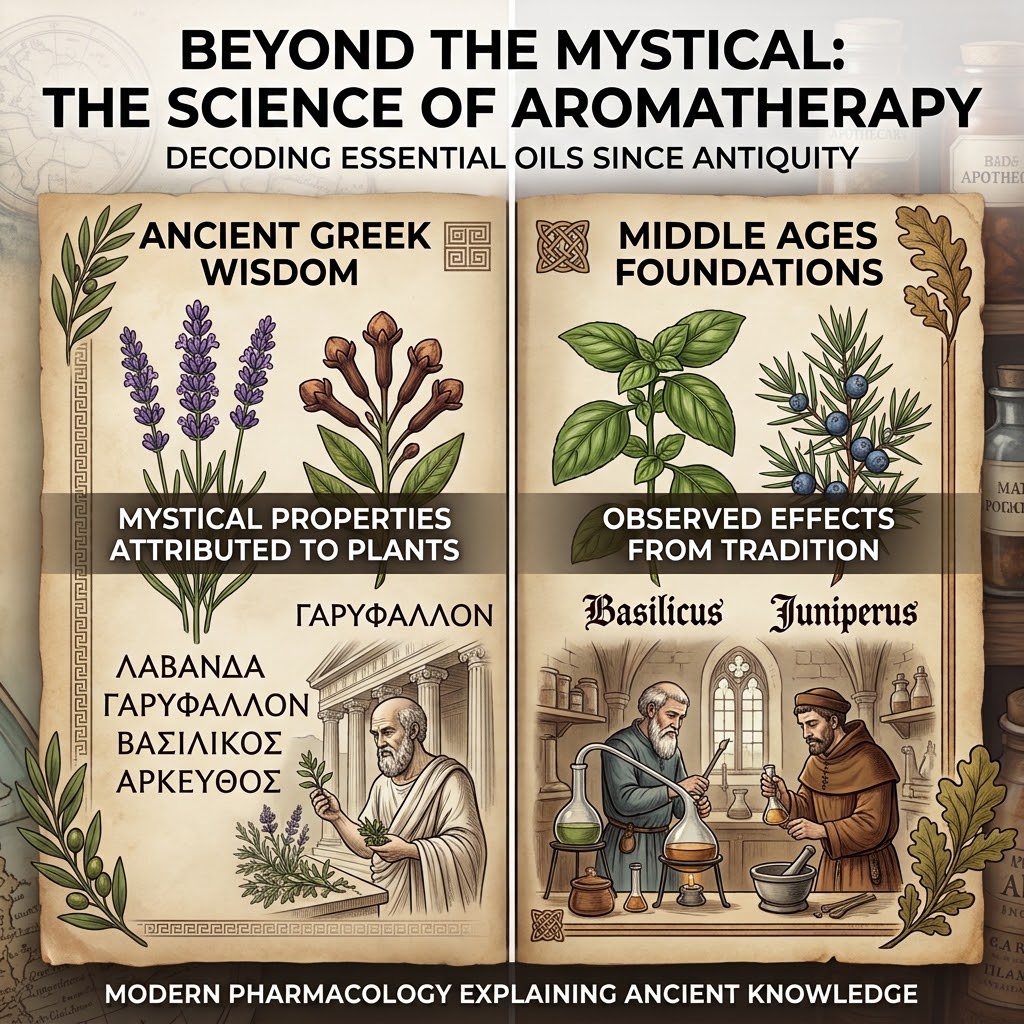
For centuries, these profound physiological shifts were attributed to the mystical signatures of plants. Ancient healers recognized their power, yet the mechanisms underlying their influence remained shrouded in mystery.
Today, modern neuropharmacology pulls back the curtain. What was once seen as magic is now understood as precise chemistry—active volatile molecules directly tuning our receptors, silencing pain signals, and regulating autonomic nervous system pathways.
Welcome to an exploration of the active components of essential oils through the lens of evidence-based science.
Inside This Series
Category 1: The Neurological Relaxers
Linalool: Central Neural Dampening + Muscle Tension Release
Ho Wood, Coriander, lavender
Geraniol: Thalamic Sensory Dampening + Cognitive Moderation
Rose, Palmarosa, Geranium
Beta-Myrcene: Localized Sensory Suppression + Muscular Tension Release
Wild Thyme, Hops, Ylang Ylang
Cedrol: Sympathetic Nervous System Suppression + Parasympathetic Engagement
Cedarwood, Cypress, Juniper
Alpha-Pinene: Endocrine Stress-Response Attenuation + Cortisol Reduction
Frankincense, Pine, Juniper Berry